Personal Identity Theft Down, Business Up

In IR 2017-123, IRS Commissioner John Koskinen reported significant success in reducing personal identity theft. From January to May of 2016, 204,000 taxpayers reported being victims of identity theft. However, for the first five months of 2017, the number of identity theft victims declined 47% to 107,000 taxpayers.

Koskinen stated, “The IRS, state tax agencies and the tax community have worked hard to turn the tide against tax-related identity theft. We are making progress in protecting individuals, but still have more work to do, especially in the business tax area and involving tax professionals. Continued lapses in simple security measures can happen in tax professional offices and other businesses as well as at home.”

As Koskinen observed, the news was different for identity theft involving business related tax returns. There were 10,000 reports of business returns with identity theft issues in the first five months of 2017. The number of similar incidents in 2016 was 4,000 for the full year. Cybercriminals continued to target tax professionals. Most of the fraudulent income tax returns were for corporations, trusts or estates.

Koskinen noted, “It is especially difficult to identify any tax return as fraudulent when criminals are using information stolen from tax preparers. The stolen data allows criminals to better impersonate the legitimate taxpayers.”

In the information letter, the IRS updated recommended steps for business protection against identity theft.

  1. Education – Explain the dangers of phishing activity to all staff. Warn them to be especially wary of emails that claim to be from clients.
  2. Software – Install and use excellent quality security software. Security software should automatically update each day.
  3. Passwords – Use strong passwords. These will have multiple characters, upper and lowercase letters and numbers.
  4. Encryption – Use appropriate encryption methods for sensitive data. Back up your data every day and retain backups off site.

“Big Six” Agreement on Tax Reform

In the midst of uncertainty about health care reform, on July 27 six leaders of the House, Senate and White House claimed agreement on the provisions of tax reform. The six leaders were House Speaker Paul Ryan (R-WI), House Ways and Means Committee Chair Kevin Brady (R-TX), Senate Majority Leader Mitch McConnell (R-KY), Senate Finance Committee Chair Orrin Hatch (R-UT), Treasury Secretary Steven Mnuchin and National Economic Council Director Gary Cohn.

Their release stated, “We are now confident that, without transitioning to a new domestic consumption-based tax system, there is a viable approach for insuring a level playing field between American and foreign companies and workers, while protecting American jobs and the U.S. tax base. While we have debated the pro-growth benefits of border adjustability, we appreciate that there are many unknowns associated with it and have decided to set this policy aside in order to advance tax reform.”

The stated goals of the group of six leaders are to reduce individual and business taxes “as much as possible.” There would also be lower rates on passthrough businesses, even though they are now dropping the plan for a border adjustment tax.

A key issue is whether or not there would be expensing of new equipment. Chairman Brady has been an advocate of the border adjustment tax as a way to pay for this provision. He stated, “That means that expensing is an enormous pro-growth provision. You get some the greatest bang for the buck in growth from allowing those business to have a zero tax rate on new investment. Unprecedented expensing means that we recognize the growth aspects. We are pushing towards more than it is in the tax code today, and as far as we can, because that will drive productivity, wages and economic growth.”

The statement did not explain whether or not it will be possible to find $1 trillion in new revenue to cover expensing. There is no specific reference to any tax increase.

Ways and Means Committee Member Lloyd Doggett (D-TX) published a release and highlighted the challenges facing Chairman Brady in drafting a bill without the border adjustment tax. Doggett stated, “By finally abandoning their ill-advised border adjustment tax, Republicans have created a trillion dollar hole in their plan.”

Editor’s Note: The border adjustment tax was very unpopular in the Senate. The challenge for Brady is to release a bill in September without this revenue. If he continues to plan to release a revenue-neutral bill, then there will have to be a limit to expensing and probable smaller rate deductions in business, personal and corporate taxes. It is unknown whether there still will be a plan to repeal both the alternative minimum tax and the estate tax.

Tax Reform and Giving to Colleges

On a July 20 webcast by the National Association for College and University Business Officers, Brian Flaven of the Council for Advancement and Support of Education (CASE) discussed the potential effect of tax reform on charitable giving to colleges and universities.

There are two provisions of the White House plan that may impact gifts. First, the top rates may be reduced. Upper-income donors in 2017 may save as much as 39.6% in federal taxes on their charitable gifts. If the top personal tax rate is reduced to 33%, their tax savings will be lower.

However the larger issue is the White House proposal to double the standard deduction. This change will simplify tax-filing for many Americans because they will no longer be required to itemize. The downside for nonprofits is that charitable gifts are the largest itemized deductions for many senior Americans.

Currently, about 30% of American taxpayers itemize. By itemizing deductions, taxpayers are able to claim and deduct their charitable gifts. If there is a new tax bill with a much larger standard deduction and repeal of deductions for state and local taxes, the number of itemizers may be reduced from 30% to as low as 5%.

Flaven notes, “We have really been encouraging the Administration and Congress to consider the universal charitable deduction as a way to help offset some of these unintended negative consequences on charitable giving that result from the doubling of the standard deduction and other aspects of tax reform.”

The CASE solution is to move charitable giving “above the line” and enable taxpayers to benefit both from charitable deductions and the standard deduction.

If the charitable deduction were moved above the line, CASE predicts that there would not be a decrease in giving, but there could be an increase of $4.8 billion in charitable giving each year.

Applicable Federal Rate of 2.4% for August — Rev. Rul. 2017-15; 2017-32 IRB 1 (19 July 2017)

The IRS has announced the Applicable Federal Rate (AFR) for August of 2017. The AFR under Section 7520 for the month of August will be 2.4%. The rates for July of 2.2% or June of 2.4% also may be used. The highest AFR is beneficial for charitable deductions of remainder interests. The lowest AFR is best for lead trusts and life estate reserved agreements. With a gift annuity, if the annuitant desires greater tax-free payments the lowest AFR is preferable. During 2017, pooled income funds in existence less than three tax years must use a 1.2% deemed rate of return. Federal rates are available by clicking here.

Kids FUNd Awards to 14 Charities

Central Kansas Community Foundation (CKCF) is pleased to announce the 2017 Central Kansas Community Foundation Kids FUNd grantees which are funded from proceeds from the L. Marie Haun Charitable Fund for Children.

Since 2005 the Kids FUNd has been supporting local projects and programs serving kids. Originally this fund was supported by the Sand Creek Station Pro/Am Golf Tournament. After 2012 the Pro/Am completed their support of the fund and the Haun Charitable Fund was started as a means of continuing the provision of making grants to kid serving charities. L. Marie Haun left a lovely legacy to support organizations not only in Harvey County, but in any service area of CKCF and their affiliates. The fund is eligible to those who have interest in children’s behavioral research, child welfare, teaching parent skills, and/or strengthening families.

This year $30,000 was given to 14 organizations that are providing programs and projects that are supporting area children and families. Here is the list of the organizations who received funding this year and are doing amazing work within our local communities:

  • Kansas Children’s Service League- “Period of PURPLE Crying Shaken Baby/Abusive Head”
  • Kids Need to Eat, Inc. – “Kids Summer LunchBox 2018”
  • Mirror, Inc. – “Youth as Resources/Empowered Youth Creating Positive Change”
  • Harvey County DV/SA Task Force, Inc. – “Building Better Lives for Youth”
  • USD 440 Halstead/Bentley School District – “Dolly Parton’s Imagination Library”
  • EmberHope, Inc. – “Building Trauma Informed Care Capacity”
  • Sunlight Children’s Advocacy and Rights Foundation – “Sunshine Children’s Home”
  • Communities in Schools of Mid-America – “CIS Program at El Dorado Middle School”
  • Kansas Learning Center for Health – “Kids FUNd Corner”
  • Peace Connections – “Harvey County Circle of Hope – Youth Development”
  • USD 402 Augusta Public School District – “Ewalt Elementary Social/Emotional Learning Information and Support”
  • Augusta First United Methodist Church for Special Families – “Lending Library Program”
  • Community Playschool, Inc. – “Learning About Emotions Curriculum”

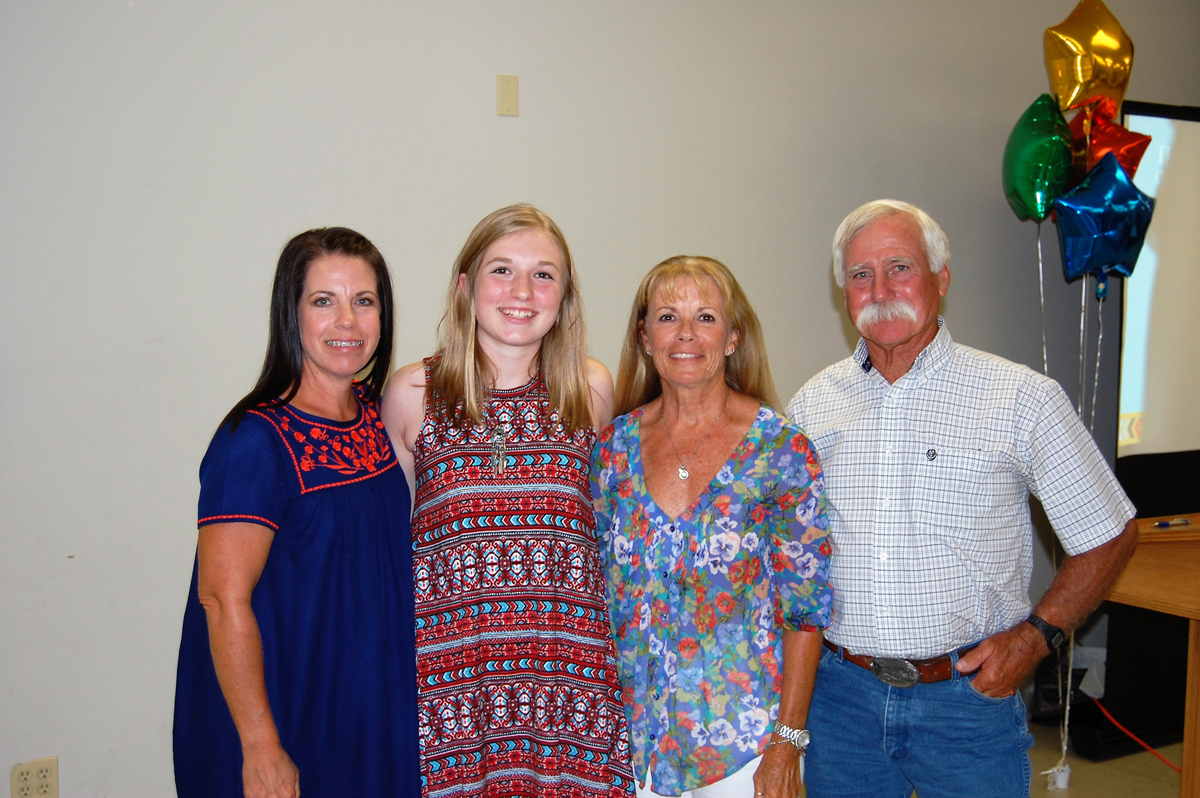
“I know that Marie would be so happy to see all the wonderful projects she has supported with the legacy she left”, stated Wynona Haun, Newton, sister in law to the late L. Marie Haun.  Wynona has served on the grants review committee the past four years and enjoys reviewing the applications each year.  “This year there was a total of 31 applications, and it is hard to determine what projects/programs to support because they are all worthy causes to support.”

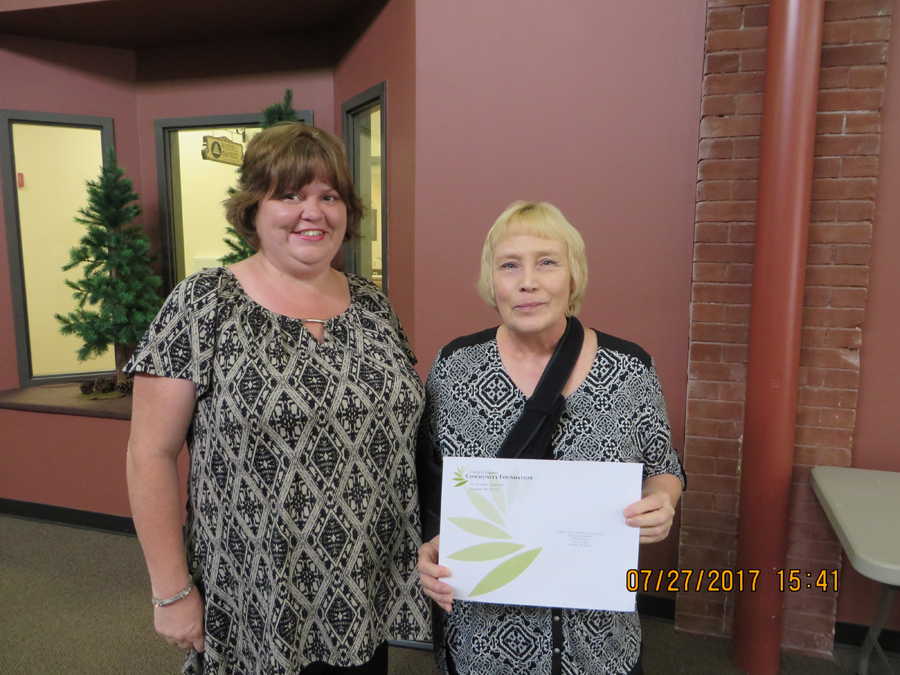
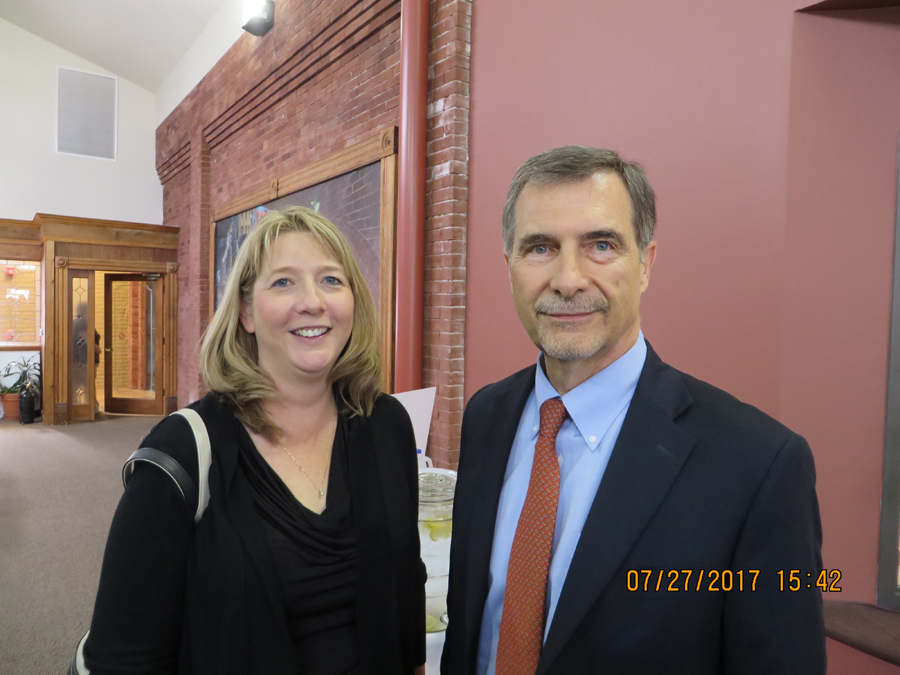
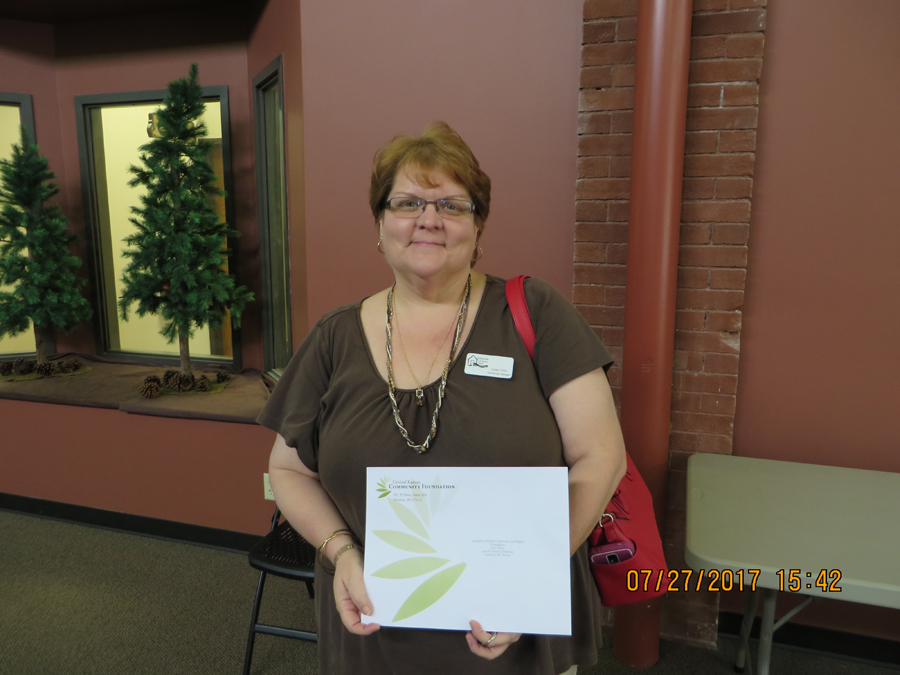
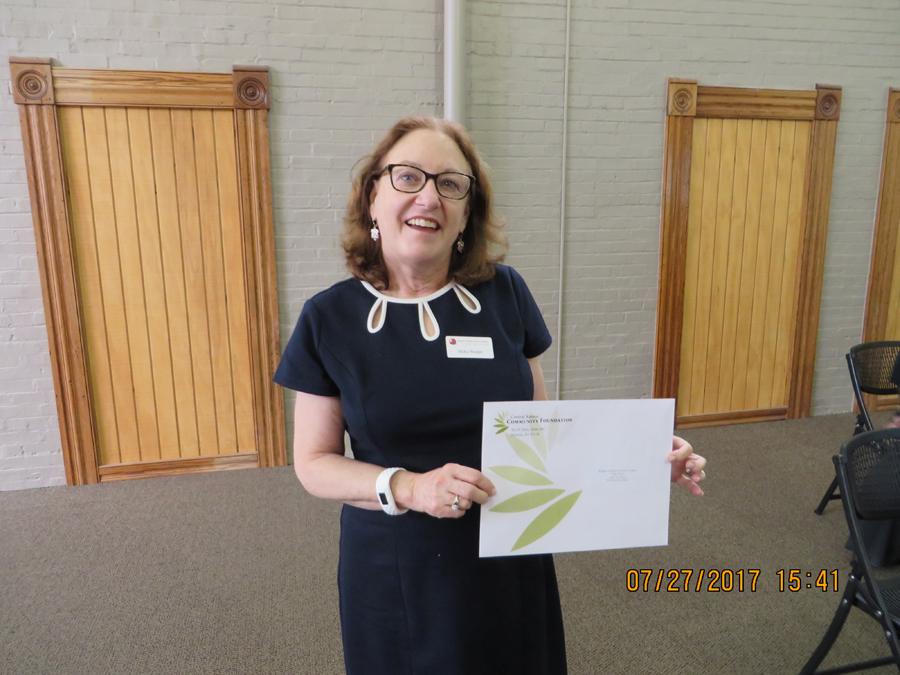
Organizations were presented their awards at an award ceremony on Thursday, July 27, 2017 at the Old Mill Plaza, 301 N. Main, Newton @ 4 pm.

Personal Planner

Your Family Letter – Memorial Services

A family letter is a key part of a good estate plan. It is much more personal than many of your estate documents. A family letter allows you to share your heart and show appreciation and gratitude to family members. During a time when family members are grieving, it also helps them to complete many practical steps to protect your property.

The family letter may have up to ten different sections. Each section will cover an important but separate topic.

Estate Data

Your estate organizer usually has four parts. It will explain the family names and key information, identify your attorney, CPA and other financial and health advisors, cover all of your assets and financial information and outline your estate planning choices.

The estate organizer may be printed or you may use an online version. Your family letter should explain where the information is located. If you are using an online estate planner, it’s important to know your account name and password so the information will be available.

Important Documents

Your important documents will generally be safeguarded in three different ways. First, many individuals have a safe deposit box. The safe deposit box typically holds birth certificates, death certificates, degrees and other legal agreements, marriage or divorce documents, military discharge records, property deeds, a personal property inventory, stock and bond certificates and vehicle titles.

Second, you may have a fireproof box at home. This box will frequently include your insurance policies, your living will, medical power of attorney or advance directive, trust documents and your will.

Third, there are some items that should be left with your attorney, friend, agent or another trusted person. These are items that may be needed while you are still living or will be necessary very soon after you pass away. These documents (or copies of documents) could include your financial power of attorney, a durable power of attorney for healthcare or advance directive, your living will, trusts and your will.

Accounts and Passwords

Because an increasing number of records and information are retained online in personal accounts, you will want to be certain that your personal letter lists all accounts. You may decide to include passwords with the personal letter. Alternatively, if you are entrusting all of this information to a specific person or other location, that should be identified.

With the rapid movement to online banking, online mutual funds and securities accounts, donor advised fund accounts, health savings accounts and your email accounts, you may have six to 10 accounts with various passwords. It will be important to have all of this information recorded.

Your Family History

While your estate organizer will include basic information about you and your family members, there is an excellent opportunity in your family letter to discuss your family history. This can include a few short paragraphs that give the names and background of your parents. List all of their children or other key relatives in your family. Your history may discuss marriages, divorces and any blended family relationships. Finally, the family history will show the date of death for persons who have passed away.

Family history can include discussions of your activities, interests and career. It enables all of your extended family to have a good picture of your entire life.

Care for Children, Grandchildren or Pets

If you are responsible for any children, grandchildren or pets, this is an opportunity for you to explain your plan for their care. While your estate planning documents will normally appoint guardians for your children or grandchildren who are under your care, it still may be beneficial for the guardian to receive recommendations from you on their education and other areas of development that you understand very well. If someone is to care for pets, you may have recommendations on the way in which that is done.

Memberships

You may have memberships in a number of organizations. Some memberships, such as those in a golf course or in a club that purchases various types of sporting event tickets, are transferable to heirs. It would be helpful to your family for you to list any memberships that you have so they can handle them properly.

Care of Your Body

When you pass away, your body may be in the custody of a medical center or nursing home. If you have previously decided to make any organ donations, it is helpful to explain that decision in your family letter. The requirements for making organ donations are typically covered under state law. In many cases, decisions on organ donations are made when you sign your living will or advance medical directive.

Funeral or Memorial Services

The cost of many funerals now exceeds $10,000. If you would like to assist family members in the decisions surrounding your funeral or memorial service, the family letter is an excellent way to do so.

First, your family will need to decide whether to have a burial in a cemetery with a casket or to use cremation services and an urn. You may have personal or religious reasons for preferring one or the other.

With a casket and burial in a cemetery, your family will generally make use of a funeral home. Because there now is significant competition in the industry, funeral homes are starting to offer advance prices and package services. If you desire a specific range of services, type of casket or prefer not to be embalmed, those directions are helpful to your family.

There are funeral consumers’ alliances in many locations. Your family may find assistance and guidance on www.funerals.org. This guidance may help them make good decisions during a very difficult time in the midst of grief over your loss.

If you are a veteran, your family may want to contact the Department of Veterans Affairs. You may qualify for a gravesite at no cost in one of the 130 national cemeteries for veterans and their spouses.

Obituary

In your funeral or memorial service, there will be eulogies. It is also customary to have a printed description of your lifetime. This will frequently include your basic history, awards, achievements, military service and lifetime employment. If you have specific requests for information to be included in the obituary, it is helpful to your family to give them guidance. You may have certain principles or values that are important to you that you would like to share through the obituary. This is an opportunity for you to communicate your values to the public.

Final Words and Blessings for Family

Your family letter may conclude with a word of blessing. It is a tradition in many cultures for the elders to provide a blessing for the next generation. This is frequently done when the elder is still living, but certainly your family letter provides a similar way to bless your children, grandchildren, nephews, nieces and other family members.

Your final words of wisdom and blessing for family members will be of great comfort as they grieve for your loss. It is an appropriate and fitting way to conclude your family letter.
Central Kansas Scholarship Recipients Honored

Central Kansas Community Foundation (CKCF) located in Newton, Kansas serves the surrounding region as a parent foundation to twenty (20) affiliates, 15 of which are regional rural communities.

The foundation hosted the 2017 Regional Scholarship Award Ceremony at our Lady of Guadalupe, Newton, KS on Friday night, July 21, 2017. CKCF was celebrating 86 scholarship recipients for the 2017-18 academic year. Over 170 guests participated in the event that highlighted donors who make these scholarships possible.

The mission of this 501 (c) (3) charitable organization is to Build Stronger Communities through Charitable Giving. This mission provides direction for the main purpose of improving the quality of life for generations to come. A community foundations value is not just about today, but tomorrow. What could be more fitting than a celebration for students that will be the workforce of tomorrow. Angie Tatro, Executive Director said, “Investing in our youth is an investment in our Future.” She went on to say of the 86 recipients most will be attending higher education institutions in Kansas, however six students will be going out of state.

Scholarships distributed this year ranged in size from $500 to $3,400. Nearly $100,000 is being given this year through competitive and designated scholarship. CKCF manages 69 competitive scholarships and 12 designated scholarships. This specialized area of funds makes up about ten (10) percent of total assets under management at the foundation.

To bring home the meaningful nature of scholarships, Jacque Sundgren shared her family’s legacy of their daughter, Jenny Sundgren Baker. Steve and Jacque Sundgren lost their daughter in a car accident in 2003. They had a desire to keep her legacy alive. Jacque shared how their family has done this by establishing a donor advised fund (DAF) in Jenny’s name at CKCF as well as a scholarship fund for graduates of Flinthills High School, located in Rosalia, KS. Jenny had a fondness for the older population and annually the DAF distributes to the Butler County Department on Aging among other charities. This year the Flinthills high school scholarship recipient, Gina Brown, will be going to Wichita State University. Tatro said, “the Sundgren family has turned tragedy into triumph.”  Jenny’s legacy lives on as many, nearly most of the scholarships under management at CKCF. While not all scholarships are memorial funds, many are. “It is important that our students are aware of the source of their gift”, Tatro said.

In closing Tim Hodge, Chair of the CKCF Board, said “folks this is a special night, coming together as a region for a positive celebration.” He went on to congratulate the recipients and further express how CKCF is able to do this work because of community support and generous donors.

The event was sponsored by The Citizen’s State Bank, Edward Jones, Everence Financial, Office Plus, Stucky Investments, Peabody Community Foundation and Waddell & Reed.

Affiliates served by CKCF include the following communities, Butler County, Augusta, Douglass, El Dorado, Elk County, Florence, Fredonia Area, Goessel, Halstead, Hesston, Hillsboro, North Newton, Remington Area, Valley Center; plus, non-community affiliates that include: Franklin D. Gaines & Beverly J. Tipton Foundation; Second Century Library Foundation – Newton; Trinity Heights UMC Foundation; Walton Rural Life Center Charter School Foundation and Women’s Community Foundation.

If you are interested in learning more, please contact Angie Tatro, Executive Director at 316-283-5474. Together We Can Accomplish Great Things!

Social Security Advice for Soon-To-Be Retirees


Can you recommend any services that help pre-retirees decide when to start drawing their Social Security benefits? My wife and I are approaching retirement age and want to carefully weigh our options to make sure we’re maximizing our benefits.

Deciding when to begin collecting your Social Security benefits could be one of the most important retirement-income decisions you’ll make. The difference between a good decision and a poor one could cost you tens of thousands of dollars over your retirement, so doing your homework and weighing your options now is a wise move.

What to Consider

As you may already know, you can claim Social Security any time between the ages of 62 and 70, but each year you wait increases your benefit by 5-8%. There are other factors you need to take into account to help you make a good decision, like your health and family longevity, whether you plan to work in retirement, along with spousal and survivor benefits.

To help you weigh your claiming strategies, you need to know that Social Security Administration claims specialists are not trained or authorized to give personal advice on when you should start drawing your benefits. They can only provide you information on how the system works under different circumstances. To get advice you’ll need to turn to other sources.

Web-Based Help

Your first step in getting Social Security claiming strategy advice is to go to SSA.gov/myaccount to get your personalized statement that estimates what your retirement benefits will be at age 62, full retirement age or when you turn 70. These estimates are based on your yearly earnings that are also listed on your report.

Once you get your estimates for both you and your wife, there are many online tools you can use to compare your options so you can make an informed decision.

Some free sites that offer basic calculations include AARP’s Social Security Benefits Calculator (AARP.org/socialsecuritybenefits) and the Consumer Financial Protection Bureau’s Planning for Retirement tool (ConsumerFinance.gov/retirement).

Personal Advice

If you want human help, there are specialized firms and financial advisors that can advise you too.

You can also get help through a financial planner. Look for someone who is a fee-only certified financial planner (CFP) who charges on an hourly basis and has experience in Social Security analysis. To find someone, use the National Association of Personal Financial Advisors online directory at NAPFA.org.


Savvy Living is written by Jim Miller, a regular contributor to the NBC Today Showand author of “The Savvy Living” book. Any links in this article are offered as a service and there is no endorsement of any product. These articles are offered as a helpful and informative service to our friends and may not always reflect this organization’s official position on some topics. Jim invites you to send your senior questions to: Savvy Living, P.O. Box 5443, Norman, OK 73070.

Published June 23, 2017

CKCF is Making an Impact | Recent News

The Central Kansas Community Foundation has been working very hard to build stronger communities through charitable giving. Please enjoy reading through the latest Foundation news!

A 1995 Annuity Makes Community Impact

In 1995 Margaret E. (Reimer) Friesen recognized the plan to bring Newton Medical Center to Newton, Kansas was important to the community. She and her husband, William, established a single-life charitable annuity fund to support the efforts of the hospital in celebration of her 26-year career as a nurse.

Goessel Community Foundation Awards Scholarships

Two Goessel High School graduates were recently awarded scholarships by the Goessel Community Foundation, an affiliate of Central Kansas Community Foundation.

Halstead Community Foundation Awards Grant to the Kansas Learning Center for Health

The Kansas Learning Center for Health (KLCH) is pleased to announce the receipt of a $2,680.85 grant from the Halstead Community Foundation, an affiliate of the Central Kansas Community Foundation.  According to Carrie Herman, KLCH Executive Director, the grant will be used towards the updating of exhibits to continue inspiring Kansas’ students to make healthy choices.


Goessel Community Foundation Awards Scholarships

Two Goessel High School graduates were recently awarded scholarships by the Goessel Community Foundation, an affiliate of Central Kansas Community Foundation.

Gentry Thiesen was selected to receive the Joyful Noise Community Child Care Scholarship in the amount of $850.  The JNCCC award was established to provide financial assistance to a current graduate who plans to further their education at a private or public college/university.  Gentry attends Wichita State University and is pursuing a degree in Pre-Medicine.

Joshua Schmidt was awarded the Karen Rae McIntosh Teaching Scholarship in the amount of $500 on May 10 at the annual Goessel High School Awards Program. This scholarship is designated for graduates pursing a degree in education.  Joshua will attend Kansas State University in the fall and plans to pursue a degree in Physical Education.

The Goessel Community Foundation’s current fundraising campaign seeks to raise $117,000 for it local Impact Fund by the end of the year. If you want to be a part of meeting the needs of local charities or in support of one of these scholarship funds, please send your tax-deductible contribution to Goessel Community Foundation, P.O. Box 244, Goessel, KS 67053.

A 1995 Annuity Makes Community Impact

In 1995 Margaret E. (Reimer) Friesen recognized the plan to bring Newton Medical Center to Newton, Kansas was important to the community. She and her husband, William, established a single-life charitable annuity fund to support the efforts of the hospital in celebration of her 26-year career as a nurse.

Newton Healthcare Foundation, which later became Central Kansas Community Foundation, worked with Friesen to establish this charitable gift, that gives twice. For 30 years, Friesen received a semi-annual distribution from the annuity and now the remainder is given to charity. She restricted her gift, the remainder of the annuity, to Newton Medical Center.

“When I spoke with Margaret’s daughter, Michelle Friesen-Carper, about the annuity beneficiary she was delighted to learn the gift would be over $17,000,” said Angie Tatro, Executive Director of Central Kansas Community Foundation. Michelle went on to say how important nursing was to her mom who worked as a night supervisor until 1982.

Individuals like Margaret Friesen are building stronger communities through giving that matters. Connecting to each of our individual passions is what can make us all better. Margaret is a great example of that.

“Throughout her career in nursing, Margaret undoubtedly touched the lives of many. Now, through this generous financial gift, William and Margaret will continue to impact those at Newton Medical Center,” said Val Gleason, President and CEO of Newton Medical Center (NMC).

Gleason went on to say, “It (the gift) will allow us to provide nursing scholarships, so that other nursing professionals at NMC will have the opportunity for continued education. It will also help fund a new Memory Garden, an outdoor area for the patients and families of our Generations Unit. Through this gift and its designation, Margaret’s legacy of caring for others will live on in our community.”

If you want to learn more about how you can set up a charitable fund and make a difference to a cause that matters to you, please contact Angie Tatro at Central Kansas Community Foundation, 316-283-5474.

Friesen passed quietly in her sleep the morning of Sunday, Feb. 19, 2017 at Bethel Kidron Village, North Newton, Kansas. Margaret and her husband, William, had three children: Randall Friesen of St. Charles, Missouri, Michelle Friesen-Carper of Valparaiso, Indiana and Warren Friesen of St. Peter, Minnesota. Such with the cycle of life, this family began a time of mourning as they also rejoiced for a birth of another great-grandson, born 20 minutes after her death.

Check Presentation May 2, 2017

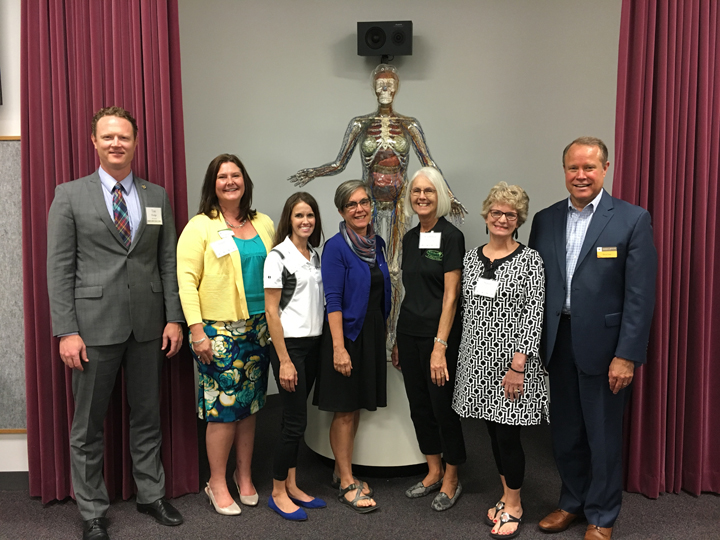
(First Row L to R: Todd Tangeman, NMC Chief Operating Officer & Chief Human Resources Officer; Heather Porter, NMC Associate Chief Clinical Officer; Val Gleason, NMC President & Chief Executive Officer; Angie Tatro, CKCF Executive Director; Jennifer Vogts, CKCF Board Member; Carrie Herman, CKCF Vice Chair. (Second Row L to R: Rod Kreie, CKCF Finance Chair; Mel Schadler, CKCF Board Member.

Halstead Community Foundation Awards Grant to the Kansas Learning Center for Health

The Kansas Learning Center for Health (KLCH) is pleased to announce the receipt of a $2,680.85 grant from the Halstead Community Foundation, an affiliate of the Central Kansas Community Foundation.  According to Carrie Herman, KLCH Executive Director, the grant will be used towards the updating of exhibits to continue inspiring Kansas’ students to make healthy choices.

The Halstead Community Foundation awarded the grant from the KLCH Endowment Fund that was created for the excusive benefit of the Learning Center to further its mission “To be a premier regional resource for quality health education.”  In addition to the KLCH Endowment Fund, the Halstead Community Foundation has other grants that have been established to invest in local service and community projects that focus on the enhancement of the Halstead community.

This past December KLCH received one of those grants of $980 to purchase a “Functional Heart and Circulatory System Model.”  This new model has an interactive component, which allows students and guests of all ages to experience the path of blood flow.  This new exhibit shows students the importance of keeping blood vessels in the heart and lungs functioning properly, giving them a clearer understanding of why healthy eating choices and exercise are essential to a healthy heart.

KLCH is a non-profit organization that was founded in 1965.  The KLCH also offers outreach programs where KLCH instructors provide curriculum-enhancing information that is both educational and entertaining.  It is our mission, “To be a premier regional resource for quality health education.” KLCH could not accomplish this without the philanthropic spirit of generous donors.  For more information, visit www.learningcenter.org or call the KLCH at 316-835-2662.

Consideration: Family Limited Partnerships

A family limited partnership (FLP) is usually created by a husband and wife. It has several purposes. An FLP can save estate taxes and permit transfers to family members. While it is uncertain what the future exemptions and estate tax rates will be, large estates are nearly certain to face major taxes in the future. The FLP is a favored method for reducing estate tax.

Another benefit is protection of assets. The FLP interests can be given to children and other relatives. It is very difficult for any creditor to reach FLP assets. The protection also extends to limiting rights of in-laws if a child or grandchild is married and later divorced.

Parents typically are interested in transferring value but retaining control. With an FLP, they can retain the general partnership interest and control the management of the FLP assets.

There are several considerations with an FLP. First, there are legal and accounting costs to create the FLP. In addition to these costs, property must be transferred. There may be transfer costs or property tax consequences upon the funding of the FLP.

Because the FLP interests are frequently given to family members, there will need to be an appraisal by a person who holds himself or herself out to the public as an appraiser. In addition, the selected appraiser must have appropriate credentials.

Finally, the parents will need to consider succession. At the point they no longer wish to manage the FLP, a child or other person will typically assume the role of general partner.

How the FLP Works

Assume that Bill and Alice have been successful real estate investors. They hold a number of parcels of development land, commercial buildings and apartment buildings. Bill and Alice would like to maintain control of their investment assets, but would like to start transferring equity to children.

An excellent solution is to create the “Jones FLP.” Bill and Alice will be 1% general partners and 99% limited partners. In some circumstances, children already have assets and may contribute them in exchange for appropriate percentages of the limited partnership interest. But in the case of Bill and Alice, they transfer all of the assets to the FLP.

Bill and Alice transferred 11 parcels of commercial real property to the partnership. These 11 parcels include development land, commercial buildings with leases and apartment buildings. After transfer of the real estate, they employed a qualified appraiser to value the limited partnership interests.

After the appraisal was completed, Bill and Alice then begin to transfer limited partnership interests to their children and to trusts for grandchildren. The appraiser reduced or discounted the gift values due to the lack of control and for lack of marketability. Because the limited partners only own a small interest in the partnership and cannot force distributions, they do not have a high level of control. The appraiser determined that there is an 18% discount for the lack of control.

Because a limited partnership interest in real estate also makes it very difficult to sell at full value, there is a discount for lack of marketability. The qualified real estate appraiser determined that another 17% discount on total value is appropriate for lack of marketability. The two discounts together add up to a total of 35%.

When Bill and Alice make gifts of limited partnership interests to children and to trusts for grandchildren, they make use of both their present interest annual exclusions and a portion of each person’s gift exemption.

Over a period of years, Bill and Alice were able to transfer a substantial portion of the limited partnership interests to family. However, because they still own the general partnership interests, they control and manage the real property. After a majority of the limited partnership interests are transferred to children, the growth in value of the assets will largely benefit their children rather than Bill and Alice.

Through this method, they can reduce future estate taxes and also maintain control. In addition, because it is difficult for the children to transfer the assets or for spouses of the children to acquire control, there is a substantial level of asset protection.

Creditors of the children are very restricted in their ability to gain control of the assets. Generally, under most state law, a creditor can only attach rights to distributions from the partnership. This makes it very difficult for any creditors to acquire a significant right to partnership assets.

Benefits and Disadvantages of Jones FLP

There are several specific FLP benefits that Bill and Alice appreciate. First, they are general partners and they have control. Second, because of the discounts they are able to make much larger gift transfers with little or no gift tax. Third, the assets are quite well protected from any creditors or spouses of the children. Fourth, assets transferred to the trust will be outside the probate process. While federal estate taxes will apply, even those will be greatly reduced. Fifth, the centralized management of the real estate property can be transferred to a successor general partner when they are ready to retire. This will enable the assets to be preserved long-term for the benefit of the family.

There are some disadvantages of Jones FLP. First, there is the cost involved in creating the documents, transferring the assets and maintaining all of the business records. Second, if there is excessive control by Bill and Alice, then the IRS may claim that they in effect have too much control over the assets. In that case the IRS may assess an estate tax based on the full value of the assets in their estate, including the value of the FLP assets.

Third, if there are too many limits on sale of the FLP interests by children, the IRS may claim that there is no “present interest” annual exclusion. For transfers that exceed the lifetime gift exemption, the IRS may assess a gift tax. Finally, FLP valuations by the appraiser may be questioned by the IRS. That could lead to an audit and litigation with the IRS.

Jones FLP Do’s

There are several actions that should be taken to make certain that the Jones FLP functions as intended.

1. Written Document – The written FLP document must state all of the rights and duties of the general partner and of the limited partners.

2. Business Licenses and Tax ID Numbers – The partnership must be treated like a business entity. There may be state business licenses and it will be necessary to obtain federal and state tax ID numbers for the partnership.

3. Title Transfer – To function properly, the partnership must receive title to Bill and Alice’s real property. They will deed the property from themselves as individuals to the partnership. There may be transfer taxes as a result of those deeds. However, it is essential that the title be properly transferred to Jones FLP.

4. Retain Assets – Bill and Alice must retain sufficient assets for their lifestyle. If they transfer all of their assets into the Jones FLP, then the IRS will claim that this is not a business entity but is simply a personal entity. If it is managed as a personal entity, Bill and Alice’s estates could face a very large estate tax on the full value of the assets.

5. Avoid Comingling Assets – Jones FLP needs to have a proper business purpose and be conducted like a business. If business assets and personal assets are comingled, then the IRS may claim that this was not treated like a business.

6. State Filing Taxes – There may be state franchise taxes or other taxes that apply to Jones FLP. The FLP should comply with all state requirements.

7. Federal and State Income Taxes – While partnerships pass through income and deductions, it will be necessary to obtain the assistance of a CPA who is knowledgeable about partnership taxes and tax returns.

8. Create FLP While Still Healthy – There have been “deathbed” FLPs created that the IRS contested. It is preferable to create Jones FLP while Bill and Alice are still healthy. It can then function for a number of years to demonstrate the business purpose of maintaining and operating their real estate enterprise.

FLP Don’ts

1. Transfer All Assets – If nearly all assets are transferred to the FLP, especially on the deathbed of the donor, then it appears that this is not a business investment but merely a substitute estate planning strategy. The IRS may contest the FLP discounts and could potentially win a claim for a very large tax deficiency.

2. Transfer Family Home or Vacation Home or Personal Assets – The FLP is a business enterprise and family homes and personal assets should be retained outside the FLP.

3. Unlimited Promise to Parents – If the children promise the parents that they can “take assets whenever needed” from the FLP, then the IRS may deny the discounts on the ground that the children and parents are not treating it like a business entity.

4. Do Not Omit Business Meetings – The appropriate business meetings, minutes and reports should be filed to indicate that the FLP is being operated as a business entity.

FLP-Lead Trusts

If Bill and Alice make currents gift to charity, a very effective way of maximizing the benefits of the FLP is the “double discount” combination of a family limited partnership and a lead trust.

The first discount is due to the transfer of assets into the FLP. Bill and Alice could transfer $4 million in real estate assets into a family limited partnership. While the underlying rent or income from the assets could continue (and it is best if the assets have no debt and therefore no debt payments), there is a substantial discount for lack of marketability and for minority interest. This discount could reduce the FLP value from $4 million to $2.5 million.

If the limited partnership interests in the family limited partnership are then transferred into a lead trust, there is a second deduction. The deduction is based on the present value of the income paid to charity. While Bill and Alice thought about a 6% payment on $4 million in assets or $240,000 per year to charity, this percentage of the discounted $2.6 million value is much higher. Therefore, the gift tax charitable deduction is much more substantial. With a lead trust that lasts for approximately eight years, they are able to obtain sufficient “double discounts” to transfer $4 million in assets. With the use of part of their gift exemption, there is no gift tax.

The benefit of the FLP-lead trust is that Bill and Alice are able to provide a very major inheritance for their family. They are significantly leveraging the use of their gift exemptions. This allows a reasonably short period of time for the payments to charity with a very large inheritance to family members at the end of that time.

Because the assets transferred to family members have a low cost basis to Bill and Alice, the children will receive FLP assets with a low cost basis. However, children could then use a tax-free sale and unitrust strategy to sell the appreciated assets with zero tax.

Bill and Alice are very pleased with this strategy and believe that this is going to be an excellent addition to their FLP plan.

FLP-Lead Trust-Unitrust

After attending a weekend conference where they were encouraged to think about the best ways to assist children in “becoming better persons,” Bill and Alice think it would be good for the children to stretch out the inheritance. They also believe that income and capital gain taxes for the children will continue to increase. Ideally, they would like to add a method or plan that would stretch out the inheritance and enable the children to reduce their future income and capital gain taxes.

One strategy to do that is to add a 5% charitable remainder trust to the end of the FLP-LT plan. The plan then starts with the Jones FLP interests that are transferred into a lead trust for eight years. At the end of eight years, the $4 million in assets may have grown to a larger amount. Assuming that they have grown to $5 million in value, then the two children of Bill and Alice would each benefit from a distribution of $2.5 million in assets to a 5% unitrust.

The unitrust would last for the life of each child. Each 5% unitrust funded with $2.5 million could produce an additional $125,000 of income for the life of the child. Because the trust may earn more than 5%, there may be inflation protection of this amount for the life of the child.

There are two major tax benefits for the child. When the appreciated assets of $2.5 million with low basis are transferred to the unitrust, they can be diversified tax free. In addition, earnings above the 5% payout compound tax free for life in the trust. Both of these benefits will save tens of thousands of dollars of income tax for each child.

Bill and Alice are delighted with the unitrust addition to their plan. The FLP-LT will leverage their transfers. After eight years, the lead trust principal is transferred to the unitrusts for the children. This will produce a long-term inheritance that they think is very helpful in encouraging the child to be a productive citizen.

In addition, there will be large savings in capital gains tax and future income tax for the children. With the belief of Bill and Alice that capital gain and income taxes will only increase in the future, these savings are a welcome addition to the overall plan.