Donor Connect October 2024

Funds for year-end, gifts from your IRA, and assets you can give to your fund

Hello from the community foundation!

We’re honored to work with so many of you as you support the charitable causes that mean the most to you and your family. If you’ve not yet established a fund at the community foundation, please reach out! We’d love to help you structure a charitable giving plan that’s just right for you, including a donor-advised fund, legacy gift, field-of-interest fund, or all of the above and more. Our goal is to help you make a difference in the ways that mean the most to you.

Here’s what’s trending:

–We’re so glad to see that field-of-interest funds and designated funds are gaining popularity. A field-of-interest fund allows you to support a specific charitable cause by leveraging the community foundation’s expertise. A designated fund allows you to support a favorite charity or charities over time. Best of all, if you’re over the age of 70 ½, both of these funds are eligible recipients of Qualified Charitable Distributions (QCDs) from your IRA, up to $105,000 a year. Reach out to learn more about field-of-interest funds, designated funds, and QCDs.

–Many Americans hold a significant portion of their net worth in one or more IRAs. Have you thoroughly considered all of the ways your IRA can help you meet your charitable giving goals, both during your lifetime and through a legacy? Giving to charity from an IRA is one of the most tax-savvy moves you can make. Reach out to the community foundation team to learn more.

–It’s that time of year! You may be starting to review your tax projections to determine an ideal level of charitable giving at the end of 2024. Before you start writing checks, stop to consider the many types of assets that frequently make even better gifts to your fund at the community foundation. Our team can help you and your advisors identify the best assets for year-end giving.

Finally, and most importantly, our hearts go out to the millions of people affected by Hurricane Helene. Community foundations in the affected areas and across the country are making it as easy as possible to donate to relief efforts. Please contact the team at the community foundation to learn more about how you can help swiftly and most effectively.

–Angie Tatro, CKCF CEO


Field-of-interest and designated funds could be your year-end friends

As you’re looking ahead to year-end giving, you’re likely thinking about transferring cash, or ideally appreciated stock, to your donor-advised fund so that you can maximize tax benefits and support the charities you love. And absolutely, a donor-advised fund can be a fabulous component of your overall charitable giving portfolio.

Think beyond donor-advised funds, though, especially at year-end. The community foundation offers a wide variety of funds to meet your charitable giving goals and also help you maximize your tax and financial planning efforts.

Two excellent fund types that are sometimes overlooked are designated funds and field-of-interest funds.

When you set up a field-of-interest fund at the community foundation, you’re setting aside charitable dollars for a specific charitable purpose. For example, you might decide to set up a field-of-interest to support research for rare diseases, to support organizations that assist homeless families in getting back on their feet, to enable art museums to acquire works that celebrate the region’s diversity, and so on. With a field-of-interest fund, you’re leaning on the knowledgeable team at the community foundation to distribute grants to achieve your wishes. As is the case with a donor-advised fund, you’ll choose a name for your fund, whether you wish to use your own name (e.g., Samuels Family Fund or Samuels Family Fund for the Arts), maintain anonymity (e.g., Maryville Fund for the Arts), or something else altogether (e.g., Bettering Our World Fund).

A designated fund is a good choice if you know you want to support a particular charity or charities for multiple years. This is useful so that the distributions can be spread out over time to help with the charity or charities’ cash flow planning, which allows you to potentially benefit from a larger charitable tax deduction in the year you establish the fund if, for example, your tax rates are higher than usual in that particular year. Your designated fund document allows you to specify the charities to receive distributions according to a spending policy you select.

Last but not least, if you are over the age of 70 ½, pay particular attention to designated funds and field-of-interest funds as year end approaches because these two types of funds, unlike donor-advised funds, can receive “Qualified Charitable Distributions” from IRAs–up to $105,000 per person in 2024!

As always, thank you for the opportunity to work together!


Your IRA is a force for good

It probably would not surprise you to learn that over 42% of Americans own an IRA. In many cases, IRAs–especially for people who have rolled over one or more employer retirement plans–represent a significant portion of a household’s net worth. When it comes to charitable planning, IRAs should never be ignored. Indeed, your IRA may offer some of the best opportunities to support the causes you care about.

For starters, no matter what your age, consider the benefits of changing the beneficiary designation on your IRA to name your fund at the community foundation as the recipient of all or a portion of the account. This is an easy, tax-effective way to leave a bequest to support the causes you care about. The community foundation can help you structure the terms of your fund to match your intended charitable legacy. For example, you can make arrangements for your children to serve as advisors on the fund to recommend grants to particular areas of interest, or the community foundation itself could deploy the money to support the community’s areas of greatest need or even the support foundation’s own mission-based operations.

The reason an IRA beneficiary designation is such an ideal form of charitable bequest is because of the tax advantages. Dollars flowing to the community foundation from an IRA upon your death are not subject to estate tax. In addition, as a public charity, the community foundation does not pay income taxes on the IRA assets it receives. By contrast, if you were to name your children as beneficiaries of the IRA, those IRA distributions to the children are subject to income tax, which can be hefty given the tax treatment of inherited IRAs. Plus, the IRA assets would be included in your estate for estate tax purposes.

Exploring ways to give your IRA to charity can also serve as a helpful reminder to review all of your beneficiary designations. Although they may appear to be innocuous and may even be easy to overlook, those beneficiary designation forms actually represent critical components of your estate plan. To understand this, you need look no further than the cautionary tale of a Procter & Gamble employee who died in 2015, leaving behind a retirement plan. Way back in 1987, the employee had named his girlfriend as the beneficiary of his retirement plan. Despite their relationship ending, the employee never updated the beneficiary designation. By the time the employee died, the retirement plan, which had grown to nearly $1 million, passed via the beneficiary designation to the 1980s ex-girlfriend.

Finally, if you have reached the age of 70 ½, you can make what’s known as a Qualified Charitable Distribution (“QCD”) from your IRA directly to certain charities, including a designated fund or a field-of-interest fund at the community foundation–up to $105,000 per year per spouse. You won’t pay income tax on the distribution and, happily, if you’ve reached the age for Required Minimum Distributions, your QCDs count toward those distributions.

The upshot? Next time you review your financial and estate plan with your advisor, take a close look at your IRAs. If you intend to leave a charitable legacy, or if you’d like to support your favorite organizations during your retirement years, your IRA may be your best bet to make a big difference in the causes you care about.


Variety is the spice of … giving

If you’ve been working with the community foundation for a while, you certainly know that it’s easy to make a contribution to your fund. And by now, you likely know not to automatically reach for your checkbook! The team at the community foundation is happy to work with you and your tax advisors to review the options for types of gifts. Here’s food for thought:

Marketable securities

Gifts of long-term appreciated stock to a donor-advised or other type of fund at the community foundation is always one of the most tax-savvy ways to support favorite charitable causes because capital gains tax can be avoided. Gifts of publicly-traded stock, for example, are easy to transfer to a fund. The community foundation team provides transfer instructions to make the process simple.

As is the case with a cash gift, the community foundation will provide a receipt for tax purposes, and the gift of stock will be valued at the shares’ fair market value on the date of transfer. When the community foundation sells the shares, the proceeds flow into your fund without any reduction for capital gains taxes. This is because the community foundation is a 501(c)(3) charitable organization and therefore does not pay income tax. That would not have been the case, however, if you had sold the stock first and then transferred the proceeds to your fund; you would owe capital gains tax on the sale. Especially in cases where you have held the stock a long time and it’s gone up significantly in value, the capital gains hit can be big.

Closely-held business interests

The community foundation team is happy to work with you and your advisors to explore how you might give shares of a closely-held business to a fund at the community foundation. Not only will transfers be eligible for a charitable deduction during the year of transfer (and at fair market value if the shares are held for more than one year), but also these gifts could potentially reduce income tax burdens triggered upon a future sale of the business. Be sure to talk with our team well before any potential sale is in the works; otherwise, you could lose out on tax benefits. Gifts of closely-held business interests are powerful but can be tricky to administer.

QCDs from IRAs

As always, keep in mind that the Qualified Charitable Distribution (“QCD”) is a very smart way to support charitable causes. If you are over 70 ½, you can direct up to $105,000 from your IRA to certain charities, including a field-of-interest, designated, unrestricted, or scholarship fund at the community foundation. If you are subject to the rules for Required Minimum Distributions (RMDs), QCDs count toward those RMDs. That means you avoid income tax on the funds distributed to charity. Plus, keep in mind that leaving your IRA to your fund through a beneficiary designation is a very tax savvy move, so be sure to discuss this option with our team and your tax advisors.

Real estate

You can give a tax-deductible gift of real estate, such as farmland or commercial property, to your fund in a variety of ways. An outright gift is always an option; lifetime gifts of real estate held for more than one year are deductible for income tax purposes at 100% of the fair market value of the property on the date of the gift, which also avoids capital gains tax and reduces the value of your taxable estate. Other ways to give real estate include a bargain sale or a transfer to a charitable remainder trust which produces lifetime income for you and your family.

Life insurance

Don’t overlook life insurance as an effective charitable giving tool, whether by naming your fund at the community foundation as the beneficiary or, in the case of whole life policies, naming the fund as beneficiary and transferring the policy itself. If you transfer a policy, you may be able to make annual, tax-deductible contributions to the community foundation to cover the premiums.

Other “alternative” assets

The community foundation is happy to discuss your options for giving other non-cash assets to your fund at the community foundation, including oil and gas interests, negotiable instruments, cryptocurrency, artwork, and collectibles.

We look forward to working with you to explore all the options!


The team at the community foundation is honored to serve as a resource and sounding board as you build your charitable plans and pursue your philanthropic objectives for making a difference in the community. This newsletter is provided for informational purposes only. It is not intended as legal, accounting, or financial planning advice. Please consult your tax or legal advisor to learn how this information might apply to your own situation. 
Donor Connection – September.24

Hello from the community foundation!

Thank you for the opportunity to work together! Already we are hearing from many donors and fund holders about your year-end giving plans. We couldn’t be happier that so many of you are planning ahead to be sure you have plenty of time to accomplish your charitable goals for 2024. Of course, we’re happy to help put things together right up until the end of December, but it’s really nice to have plenty of time to ensure that charitable, tax, and estate planning objectives are all considered. This is especially important if you’re just getting started working with the community foundation or are considering doing so this year. We’re ready to talk when you are!

In this issue, we’re covering three topics that have popped up several times recently in conversations.

–With potential tax law changes on the horizon, many people are taking a closer look at how the standard deduction might impact their charitable planning for the next few years. Learn how the community foundation can help you and your advisors work through various scenarios for organizing your giving so you don’t leave dollars on the table either for yourself or your favorite charities.

–Many people are involved with charities both as donors and as board members. If you’re one of them, you might have the opportunity to learn about different types of endowments–both the kind of endowment that a charity itself establishes as well as the kind of endowment that you as a private donor might establish for the charity. The community foundation can help with both.

–Giving to charity makes people happy. That certainly does not come as a surprise to most people who incorporate philanthropy into their lives, but you might be interested to learn how the research on these positive emotions connects to the charitable giving tools available through the community foundation. Lots of reasons to smile!

As always, we look forward to hearing from you! Thank you for everything you do for the community we all love.

With Gratitude,

Angie Tatro, CKCF CEO


Standard deduction planning: Avoid leaving dollars behind

dollars left behind.jpgOne of many items on the legislative “watch list,” especially in light of the upcoming elections, is the standard deduction. Without intervening legislation, in 2026 the standard deduction for individual taxpayers younger than age 65 is scheduled to drop from $14,600 to $8,300.

While this may spell higher taxes for some taxpayers, the news could be positive for charitable giving. You’ll recall that the Tax Cuts and Jobs Act of 2017 increased the standard deduction significantly. As a result, only 9% of taxpayers itemized deductions in 2020 compared with 31% in 2017. Although certainly not the only factor motivating charitable giving, tax incentives do play a role in donors’ decision-making about whether, when, and how much to give. Indeed, statistics recently released by the National Bureau of Economic Research indicated that the increased standard deduction resulted in $20 billion fewer charitable donations in 2018 alone.

The community foundation is happy to work with you and your tax advisors to map out a charitable giving plan for the next few years to navigate anticipated changes in the law. For example, this year you could consider using a technique called “bunching” to make two years’ worth of gifts up front to your donor-advised fund to take advantage of the standard deduction while it is still high.

If you determine that bunching is right for you, naturally, cash is easy to give in a year of higher-than-expected income. So, for example, if you earn a large bonus this year, get a big increase in compensation, take a job buyout, or experience a significant liquidity event, your surplus income could make bunching ideal.

Most of the time, though, even when you deploy a bunching strategy, donating highly-appreciated marketable securities is a better choice than giving cash because it is extremely tax efficient. Stock given to a public charity, such as your donor-advised or other type of fund at the community foundation, typically is deductible at the asset’s fair market value. The community foundation, in turn, pays no capital gains tax on its sale of the asset, thereby generating more dollars to support your philanthropic interests than if you had sold the stock and given the proceeds to your fund.

You can think outside of the box, too, and explore other assets that make great gifts to your fund. As is the case with gifts of other long-term appreciated assets, a gift of real estate or closely-held stock avoids capital gains taxes and results in more money for your favorite causes than if you had sold the asset, taken the tax hit, and donated the proceeds.

The bottom line?  Now is a perfect time to look ahead at your charitable giving plans so that you don’t leave dollars behind. Your own financial situation, as well as the charities you support, will benefit from your careful planning. The community foundation is here to help!


Giving to others gives us lots of reasons to smile

reasons to smile.jpgThe community foundation is honored to serve at the center of your philanthropy. Whether you’ve established a donor-advised or other type of fund, arranged for a bequest to a fund or to the community foundation itself, or both, our team strives to help you organize your giving to make it easy and convenient. If you’ve not yet established a fund or arranged for a bequest but are considering it, we look forward to continuing the conversation!

Charitable giving is important not only locally and nationally, but also internationally. Indeed, the World Giving Index 2024 Global Trends in Generosity reports that 4.3 billion people worldwide helped someone they didn’t know, volunteered time, or donated money to a good cause in the preceding month.

It’s no surprise that research indicates that giving to others actually puts donors in a good mood. This is especially the case, studies show, in three ways:

–The act of giving feels good in the moment

–People like having choices about their giving

–People like to see the results of their giving

We know this intuitively based on our own experiences. For instance, many of us enjoy picking out a birthday gift for a friend or family member and watching them open it.

The same good feelings translate to charitable giving. People enjoy working with the community foundation. Certainly one reason is because the community foundation activates the research’s three key factors:

–Feels good in the moment. The community foundation makes it easy to give cash, stock, or other assets to a type of fund that is the best fit for you, whether that’s a donor-advised fund, designated fund, field-of-interest fund, or unrestricted endowment fund. When you initiate the stock transfer, for example, it’s fun because the community foundation makes it easy. You know immediately that you’ve taken meaningful action.

–Offers choices. The community foundation’s tools are flexible to meet your charitable giving goals. We can help you set up an annual giving strategy, establish a bequest to your fund in your estate plan, and everything in between. Most of all, we want to help you support the causes that are most important to you, whether those are particular charities or broader areas of community need.

–Shows results. The community foundation has its finger on the pulse of our region’s priorities and how charitable giving can improve quality of life for everyone. Every day, we work with you and other families, individuals, and businesses to help you not only make a difference, but also actually see the difference you are making. From research and hands-on site visits, to networking with other donors and meeting with community leaders, our team will provide a wide range of opportunities for you to see first hand the results of your philanthropy.

We look forward to helping you incorporate charitable giving into your life in ways that help the community and make you happy!


The team at the community foundation is honored to serve as a resource and sounding board as you build your charitable plans and pursue your philanthropic objectives for making a difference in the community. This newsletter is provided for informational purposes only. It is not intended as legal, accounting, or financial planning advice. Please consult your tax or legal advisor to learn how this information might apply to your own situation. 
Ordinary People Making an Extraordinary Difference!

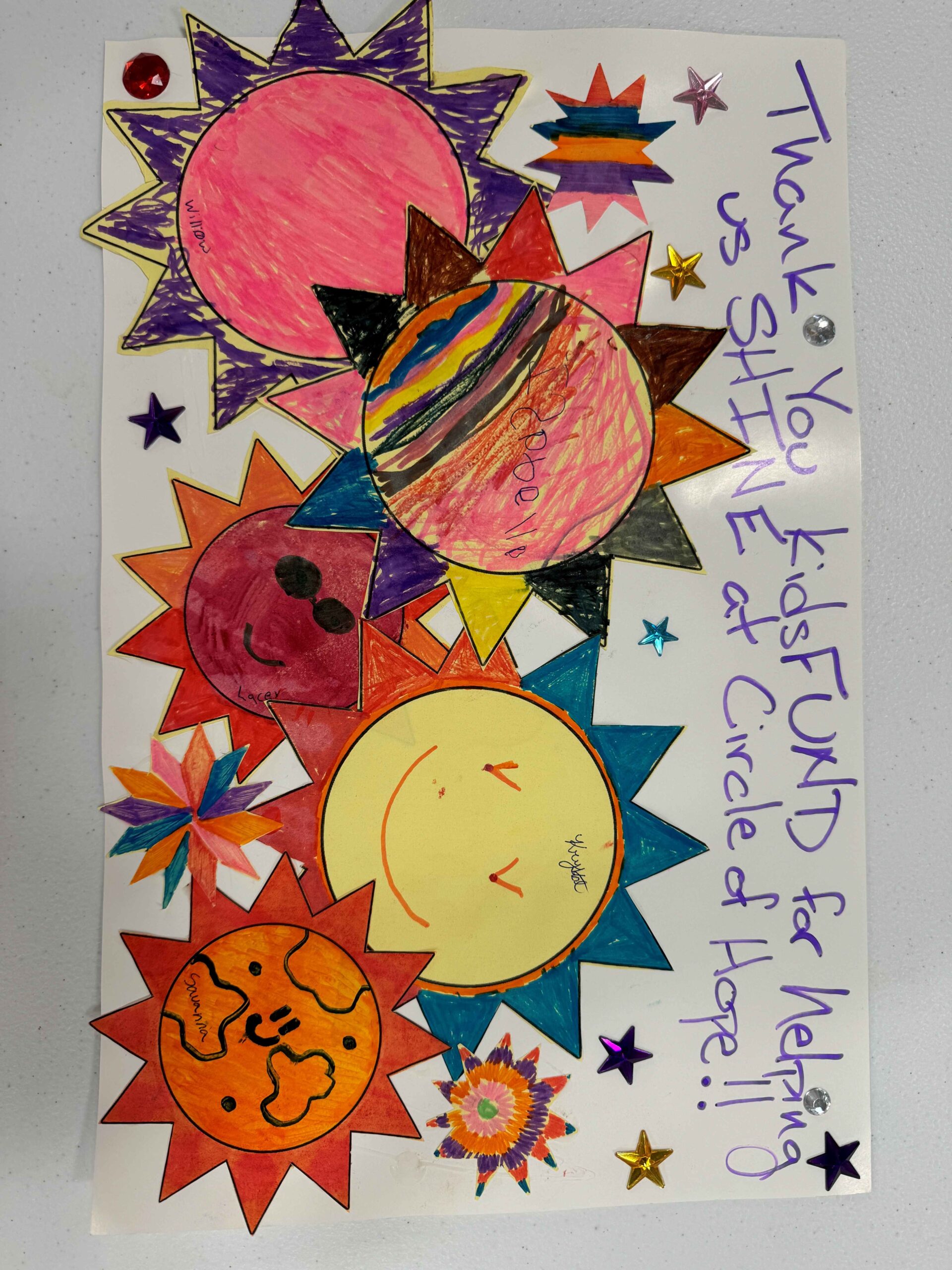
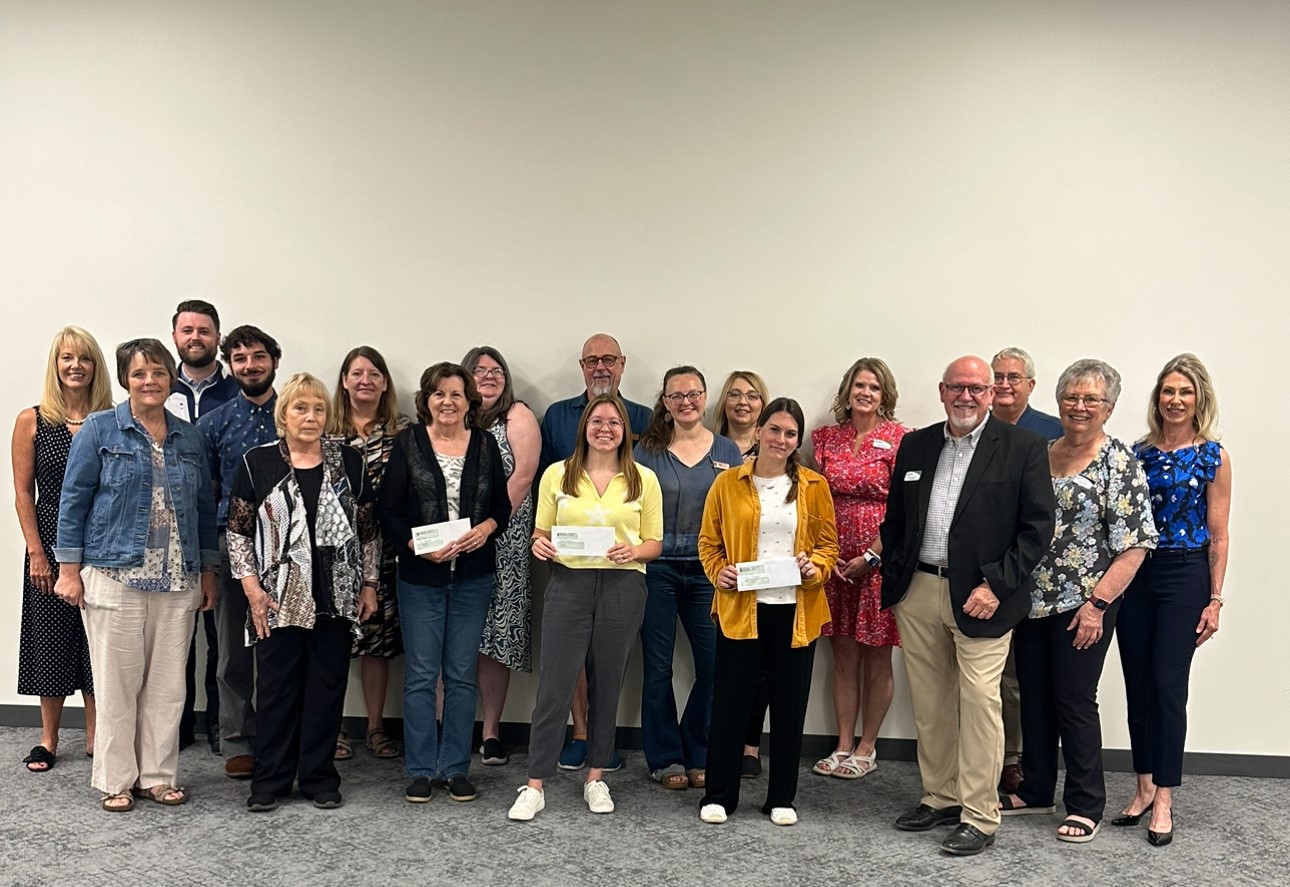
The Central Kansas Community Foundation held an Award Ceremony on August 27, highlighting the Central Kansas Kids FUNd, a testament to how ordinary people can make extraordinary contributions at the new Newton Public Library located in Newton, Kansas Lena Marie Haun, a Wichitan who began her career as a teacher, went on to hold several secretarial positions, including a 26-year tenure with the Dean of the College of Health
Professions at Wichita State University, retiring at the age of 78. Marie had a deep love for children and left a bequest of more than $600,000, which now permanently funds the KidsFUNd, supporting children’s charities across South Central Kansas.

Since 2012, her generous planned gift has provided numerous grants to children’s charities throughout Central Kansas and will continue to do so in perpetuity. The L. Marie Haun Charitable Fund for Children has awarded over $280,000 since 2012 to organizations focused on children’s behavioral research, child welfare, parenting education, and strengthening families.


Ordinary People Making an Extraordinary Difference!

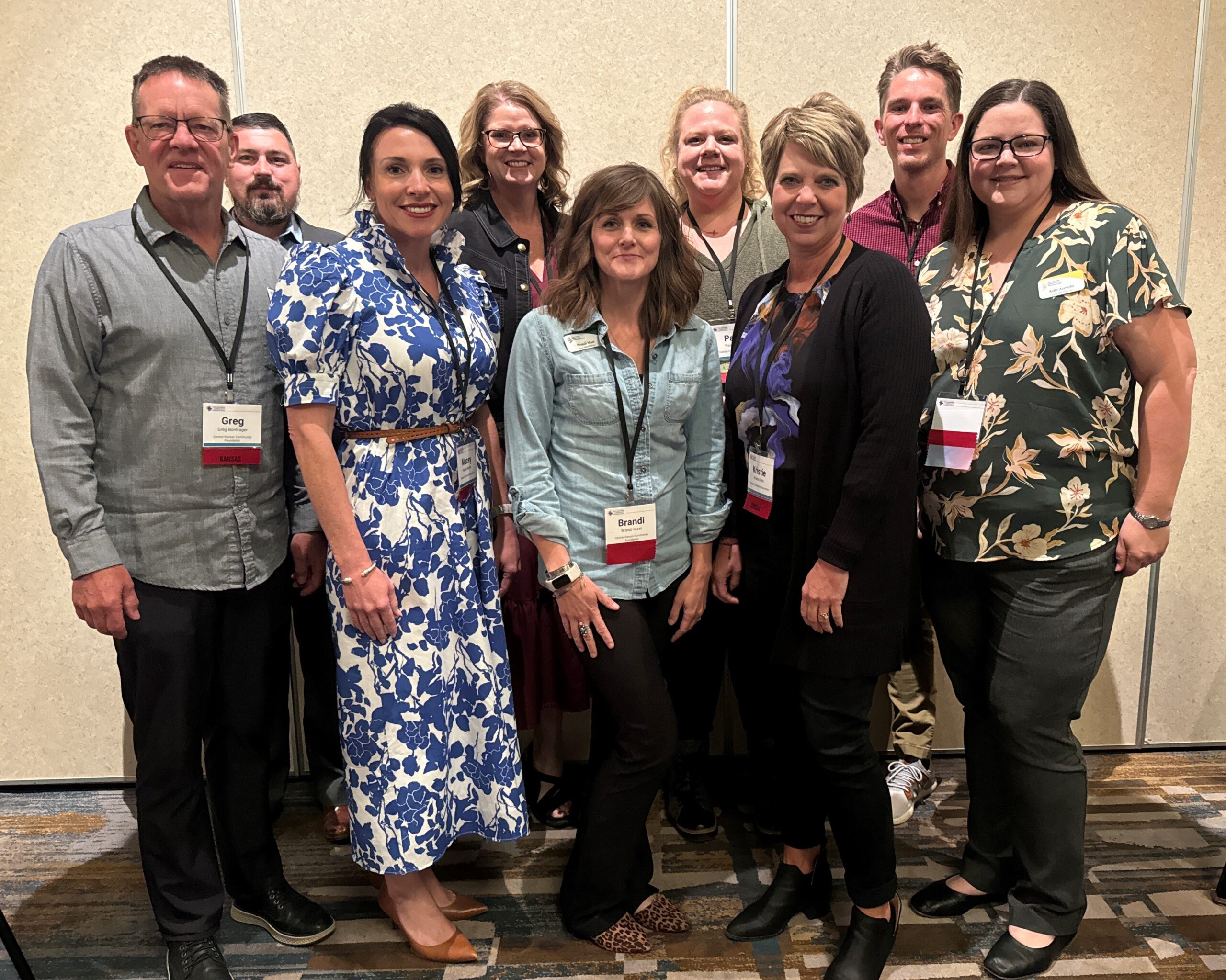
This year’s grant recipients were introduced by CKCF Board Members; Amy Budde, Allen Wedel, Jennifer Vogts, Keegan LeFevre, Rick McNary, and Tami Carlgren.

  • Family Life Center of Butler County – Safer Smarter Kids Curriculum Update,
    Parent/Child Learning & Therapy Stations Built
  • Peace Connections – Harvey County Circle of Hope
  • Kansas Children’s Service League – Harvey and Marion Counties Family Engagement
  • Families And Communities Together, Inc.- Marion County Substance Abuse
    Prevention Coalition’s “Too Good For Drugs” Education Program
  • Safehope – Parent-Child Advocacy – Building Better Lives for Children and Youth
  • Special Families – Lending Library Sensory Behavior
  • Mirror Inc. – STAND
  • Douglass USD 396 – Parents as Partners
  • USD 484 Fredonia – Lunch & Learn

These organizations are recognized for their outstanding work and the significant impact they continue to make in their communities.

New Hire for Halstead Community Foundation

Macey Mueller
Associate Director,
Hastead Community Foundation

Macey was born and raised in Burden, Kan., but has proudly called Halstead home for almost a decade. She earned a degree in agricultural communications from Oklahoma State University and a masters in the same field from the University of Arkansas before embarking on a nearly 20-year communications and public relations career that has included work in higher education, advocacy and development. Most recently, Macey has worked as a freelance writer, contributing to several state and national agricultural publications on a monthly basis.

Macey is married to Josh, a fourth-generation farmer and rancher in Halstead, and together they have four children. The family stays busy raising cattle and crops, selling their beef direct to consumers and running their livestock auction barn in El Dorado, Kan.

Since moving to Halstead, Macey has been involved with several civic groups, nonprofits and USD 440. She looks forward to using her organizational and fundraising experience and her community connections to create visibility and growth for the Halstead Community Foundation.

Ignite Rural Philanthropy – Grant Feature

The Dick and Dorothy Miller Hands-Up Grant is a Godsend for the recipients of this fund. This funding is dedicated to keeping families with children from becoming homeless. The families helped have been single mothers with children; single fathers with children; intact families; grandparents who are, unexpectedly, raising grandchildren.

Last summer, a young woman, (call her Sara) working full-time at a local assisted living facility, contacted BHI looking for financial assistance. This is a hardworking single mother of a school aged boy. Sara’s cousin needed to attend an inpatient drug treatment program and was raising two boys of her own. Sara offered to take in her cousin’s boys while the cousin attended the treatment program. Sara did not realize how much more expensive it would be to care for the extra children. By the time she reached out to BHI, she had already maximized advances from her employer. She had managed to keep her utilities paid, but was behind on her rent. Her dedication to her extended family was close to causing her and her son to be evicted from their home of nine years.

Using the Dick and Dorothy Miller Hands-Up Grant, BHI paid Sara’s arrears in rent and one more month rent. This allowed her to stay caught up with utilities and continue to care for her cousin’s children. This young woman had never asked for help before this incident and has not asked for financial assistance since. She works hard, budgets her income, and cares for her family and those she serves at her place of employment.

The Miller’s set up this fund to help people like Sara. People who are working diligently to care for their families, then a hardship causes them to be strapped financially. The kindness of the purpose of this grant is overwhelming when you hear the sigh of relief from the recipients. Recipients, like Sara, who feel both shame for asking and blessed for receiving.

Ignite Rural Philanthropy – H4C

Marion County is a rural community in central Kansas that is home to roughly 11,800 individuals. Of these individuals, there are approximately 700 residents under six years of age (Child Care Aware of Kansas). The County has identified the top three challenges residents face as the following: child care, housing, and workforce.

The Hillsboro Community Child Care Center (H4C) Board has been addressing the child care crisis in Marion County, Kansas since 2019. It was initially presented as a workforce issue due to the lack of available child care for employees. According to Child Care Aware of Kansas, Marion County is only meeting 40% of the demand for child care. Within the USD 410 School District, there is one in-home provider and one child care center that offer a combined total of two infant spots. The current child care center wishes to merge with Hillsboro Community Child Care Center upon opening.

The H4C Board conducted a Community Needs Assessment in partnership with K-State Research and Extension in July of 2021. The Board reported the following findings from the Community Needs Assessment: need for infant care, weekday care for birth to five years, and school age care. In addition, the Board reported feedback indicating the lack of child care as a workforce issue, “Many (families) are not able to work or have moved from the community to find available child care elsewhere.” In addition, the feedback indicated the “Lack of child care a deterrent to new young families looking to move into the USD 410 School District.”

Upon reviewing the findings from the Community Needs Assessment, H4C began to devise a plan that would include establishing a child care center for up to 99 children birth through 5 years of age. In January of 2022, the plan began to come to life as H4C was gifted a building from Trinity Mennonite Church with the intent to establish a child care center. In addition to the child care center, the facility would include office space for community entities that support families and youth.

H4C’s short-term goal is to renovate the facility into a child care center. The child care center would not only decrease the need for child care in the USD 410 School District, but across Marion County as a whole. The cost for the renovation is estimated to be over $3 Million.

When looking at the long-term outcomes of establishing a child care facility, up to 99 children would have the opportunity to be engaged in high quality early learning. In addition, the availability of child care could lead to an increase in economic development as more families are able to reside in the community. In turn, this would allow for more families to become invested in the workforce. Overall, the establishment of a child care center in Marion County would benefit not only the families seeking care but the County as a whole.

To date, the H4C board has raised roughly 75% of the total estimated cost for renovation. Over $1.2 million of said funds have been provided by the local community through private donations. The remaining funds have been raised through extramural funding sources including: Child Care Capacity Accelerator Grant from the Kansas Children’s Cabinet and Trust Fund, Community Development Block Grant from the Kansas Department of Commerce, and the Child Care Community Partnership Grant through Child Care Aware of Kansas.

The Hillsboro Community Child Care Center (H4C) has truly been a community lead initiative. The need for child care was brought the City of Hillsboro’s attention by the businesses and industries within the community. The understanding and value of child care has only grown since that initial meeting in 2019. Over the past five years, the work has shifted and grown from a group of 15 to 20 passionate community members, to a steering committee, to an official 501 (c)(3) not-for-profit governing board. The H4C Board represents various sectors of our community including: Civic, Education, Public Health, Religious, Business, Parent Representative, Hillsboro Community Foundation, and a Child Care Provider.

The H4C Board has scheduled bi-monthly meetings to ensure progress is being made on the initiative. H4C has hired a General Contractor and is excited to begin renovations this Summer. The renovation is expected to be completed by Spring of 2025.

Ignite Rural Philanthropy – Slate Creek


Slate Creek Elementary School in Newton is home to the severely multiply disabled (SMD) classroom for the entire Harvey County Special Education Cooperative. SMD students from the cities of Newton, Hesston, and Halstead attend school here from kindergarten through 6th grade. Many of Slate Creek’s SMD students use mobility devices, such as wheelchairs and walkers, and the school’s playground offered them no opportunity to be included in outdoor play with their peers.

This project first began in 2021 when a group of students noticed the problem and began looking for ways to include their friends on the playground. Principal Tenae Alfaro brought a fundraising challenge to the rest of the students and staff – without any promise of trinkets or prizes, the students raised over $20,000, just because they knew ALL kids should be able to play together.

In 2023, parent volunteers Joanna Bjerum, Erin McDaniel, and Sara Rickard from Slate Creek’s PTO, and USD 373 Communications Director Carly Stavola joined Tenae to ramp up the fundraising campaign. We partnered with Newton Community Foundation an affiliate of Central Kansas Community Foundation and established the All Together Now fund to receive donations and grant funding. We then added community representative Chris Conrade, president of Conrade Insurance, to the team, and he connected us with Cunningham Recreation, one of the nation’s leading park, recreation, and playground equipment suppliers.

As we told our story, generous donations started rolling in from amazing organizations like Northview Developmental Services Endowment Foundation, Asbury Park Foundation, Sunderland Foundation, Patterson Family Foundation, NMC Health, Bunting, and many more. The outpouring of support was remarkable.

This generosity allowed us to dream even bigger and pursue a larger playground designed around the 7 Principles of Inclusive Play. It will be the only National Demonstration Site inclusive playground in the entire region. These evidence-based principles move beyond minimum accessibility guidelines to make every aspect of the playground usable for all children to the greatest extent possible. It will include smooth, spongy surfacing to ensure accessibility, ramps to play decks to accommodate mobility devices and those with climbing difficulties, adequate shading to keep people out playing longer, communication panels, cozy spots that help those quick to become overwhelmed or on the Autism spectrum, sensory-rich equipment that will benefit all children’s development, and equipment designed for children of all abilities.

When school is not in session, the playground will be open to the whole community. This playground will open up outdoor play not only for children with mobility differences, but also for parents, grandparents and caregivers. We anticipate it will quickly become a destination play space, attracting people from all over the region.

Having the opportunity to be included regardless of ability is a huge social and quality-of-life issue for children who have differing mobility needs. Numerous researchers have found play is a critical part of child development and is integral to the school environment for both social- emotional and academic development.

Commitment to these principles is what helped our small but dedicated group to raise $700,000 in 2023, and our playground is now under construction. We have all envisioned what our opening day will look like in August 2024.

From our first humble school fundraiser, with kids bringing in their own piggy banks, to our final major donations, this project has been a labor of love. To our supporters, cheerleaders and generous donors, we can’t thank you enough. You have helped us build something magical – a place where ALL children can play together. Caring for one another and striving for equal access to play and inclusion have driven this campaign, whose foundation was laid by the 5- to 10-year-olds of Slate Creek.

Donor Connection: August.2024

Making a move, the kitchen sink, and getting more out of your giving

Greetings from the community foundation!

We hope summer is treating you well! If you’re already working with the community foundation to organize your giving and make an impact, thank you! If you have not yet established your donor-advised or other type of fund at the community foundation, we look forward to working together to explore the best options for you and your family.

It’s our pleasure to keep you up-to-date on issues and ideas that can help you make the most of your philanthropy. In this issue, we’re covering three strategies to help meet tax objectives, address community needs, and achieve your expectations for administrative simplicity.

–Unfortunately, many people (as well as their attorneys, accountants, and even financial advisors) are not aware that a donor-advised fund established at the community foundation is in most cases a far better fit for their clients than a donor-advised fund set up at a national financial institution. The community foundation offers much broader services, more personal attention, and deeper connections to the nonprofits whose work is essential to effecting positive community change.

–If you’re planning to leave your residence to your children in your estate plan, you might reconsider because they may not want it! The team at the community foundation can help you evaluate the various options for giving the family home to charity. You might be surprised by the possibilities.

–Building good habits is important in many areas of your life, and charitable giving is no exception. The community foundation is happy to offer tips and suggestions to make your philanthropic endeavors easier and more satisfying, which in turn makes it more fun to add regular giving into your routine.

As always, it is our pleasure to work with you as you fulfill your charitable intentions. Every day, we are inspired by the generosity of our donors and fund holders. Thank you.

–Your community foundation


This may be your best move yet! 

it all must go.jpg

If you’ve already established a donor-advised fund at the community foundation, you can understand why it’s become such a popular tool to organize your family’s giving and serve as a springboard for so many other ways to make a difference in our region.

Recently, we’ve talked with a lot of donors who work with the community foundation in a variety of ways, such as regularly contributing to a favorite organization’s endowment fund, supporting the community foundation’s operating endowment, making distributions from an IRA to a designated fund, or attending community foundation events to rally around important community priorities. Interestingly, we are discovering that some of these donors also have established a donor-advised fund at a national financial institution and in many cases did not realize that they could have set up their donor-advised fund at the community foundation.

It’s time to set the record straight!

For starters, the community foundation offers donor-advised fund holders the same tax and administrative benefits as a national financial institution, including:

  • Online access to the donor-advised fund to view balances, contributions, and grants
  • Simple process for requesting grants to favorite charities
  • Streamlined tax reporting, often represented by just one letter to provide to an accountant at tax time, even when the donor-advised fund is used to support dozens of individual charities throughout the year
  • All back-office administration, tax receipts, recordkeeping, and other requirements for the donor-advised fund’s 501(c)(3) status
  • Favorable tax-deductibility of contributions to the fund

Unlike standard national financial institutions’ donor-advised funds, though, the community foundation offers high-level, customized services to its donor-advised fund holders, including:

  • Concierge-level service by knowledgeable staff to structure estate gifts to charities and accept gifts of appreciated stock or complex assets such as real estate or closely-held stock
  • In-house experts who have a finger on the pulse of community needs, the strengths of specific nonprofits, and how to structure grant making for the highest possible community benefit
  • Opportunities to collaborate with other donors who care about similar issues and forums to tap into local and national subject matter experts
  • Opportunities to go deep into specific issue areas, both through education and hands-on involvement
  • Assistance with structuring and measuring the impact of grants
  • Family philanthropy and corporate giving services to foster a well-rounded, holistic approach to philanthropy
  • Administrative fees that are reinvested into the community foundation, itself a nonprofit, to help support operations, grow its mission, and help even more donors support the causes they care about
  • Hands-on assistance from local experts who understand both local and distant needs, and welcome the opportunity to research and identify causes aligned with donors’ goals and priorities
  • Staff members who live in the community they serve and often personally know the leaders and staff of grantee organizations and regularly hear about their needs first-hand

If you’ve established a donor-advised fund at a national financial institution, we’d love to chat about moving it over to the community foundation. At the community foundation, your hard-earned assets receive the attention they deserve as you and your family strive to make a difference in the causes you care about the most.


Not even the kitchen sink: Giving your house to charity is worth exploring

family home.jpg

August is national Make-A-Will month and a great time to check in on key components of your estate plan. The reality, as we know, is that all property remaining at death has to go somewhere. And as heartbreaking as it may be for parents of grown children, it’s usually a mistake to assume that you should automatically leave the family home to children in your will or trust. Indeed, your children may not be nearly as attached to your things as you are, and the reality is that they may not want any of them–including the house.

But don’t let this get you down. When one door closes, another door opens. It may be time to explore giving your personal residence to charity. The community foundation can help!

Reach out anytime to discuss the possibilities with the community foundation team. As we begin the conversation, we’ll evaluate which type of gift format might be a good fit for your situation. For example:

  • You can certainly deed your house to the community foundation outright. This might be a solid option if you are planning to sell the house in the near future to downsize or move to a retirement community. This is an especially good option if you do not need to rely on the sale proceeds to fund either your next move or your ongoing living expenses. And, if the total value of all your assets is in a range where you could be subject to estate tax, transferring your house to the community foundation takes the home’s value out of your estate, tax free, because of the charitable deduction. The community foundation will likely list the property shortly after you make the gift. Then, the proceeds from the sale will flow into your donor-advised or other type of fund to help you fulfill your charitable goals.
  • If you’re hoping to get a little money from the sale of your residence, but you don’t need the full amount of its value, you can explore what’s known as a “bargain sale.” This transaction allows you to sell the property to the community foundation at a price below market value, allowing you to receive some income while still making a charitable contribution.
  • Another option is to transfer your residence using a “charitable remainder trust.” You’d transfer title to the property to the trust, and the trust would provide you with income for the rest of your life (or a term of years). Any remaining value would flow to your fund at the community foundation to support the causes you care about. You’d also be eligible for an up front income tax deduction based on the present value of the amount projected to pass to your charitable fund in the future.

If you’re interested in giving your residence to your fund at the community foundation, our team will work closely with you and your advisors to carefully evaluate the opportunities and walk through all of the steps in the process. For example, it’s important to look at factors such as valuation (which must be documented with a qualified appraisal), whether there’s a mortgage on the property that would make a gift more challenging, how long you’ve held the property and your cost basis, and ensuring that a sale is not already formally or informally in the works.

You’ve spent years making your house a home. We look forward to exploring the possibilities for extending the joy your personal residence brings to you and your family by transforming the property into a source for community benefit.


Inspiring good habits: Tips for better giving

inspire good giving.jpg

The team at the community foundation is committed to sharing tips and insights that can help you get more satisfaction from your charitable giving and in turn make an even bigger difference in the causes you care about.

Here are three recommendations:

Strive for energetic effectiveness. Whether a gift to charity is $25, $2500, or $25 million, it’s cause for celebration. Philanthropic support of all shapes and sizes can make a difference. What’s even better, though, is to apply discipline to those dollars so that the strategy matches the enthusiasm. Certainly media-based philanthropy efforts are effective to raise the overall awareness about charitable giving, but awareness is just the beginning. At the community foundation, our team is dedicated to helping you apply your charitable passions to make a meaningful impact, especially by helping you address root causes with your giving, above and beyond providing immediate relief to those in need.

Give from the heart. A recent Rolling Stone article illustrates how philanthropy can shape leaders by instilling values of empathy and responsibility. The author shares a heartwarming perspective based on participating in charitable activities as a child to rally around a sister with Down Syndrome. This makes such an important point: When your philanthropic efforts mean a lot to you, you’re more likely to stay engaged for the long term, resulting in significant cumulative community return on your personal investments. It’s really inspiring to see charitable individuals view their contributions as part of their personal and professional development.

Get your kids involved. The community foundation is always striving to offer ways for fund holders to involve their children and grandchildren in charitable giving. This is really important in light of the decline in charitable giving, especially among younger generations, which is becoming a significant concern. We encourage you to explore the factors behind this trend and reach out to the community foundation to discuss potential solutions and ways you can help.

Thank you for your commitment to philanthropy! If you’re already a fund holder, we are grateful that you’ve made the choice to organize your giving by working with the community foundation. If you’re considering getting started, we’d love the opportunity to work together.


The team at the community foundation is honored to serve as a resource and sounding board as you build your charitable plans and pursue your philanthropic objectives for making a difference in the community. This newsletter is provided for informational purposes only. It is not intended as legal, accounting, or financial planning advice. Please consult your tax or legal advisor to learn how this information might apply to your own situation. 

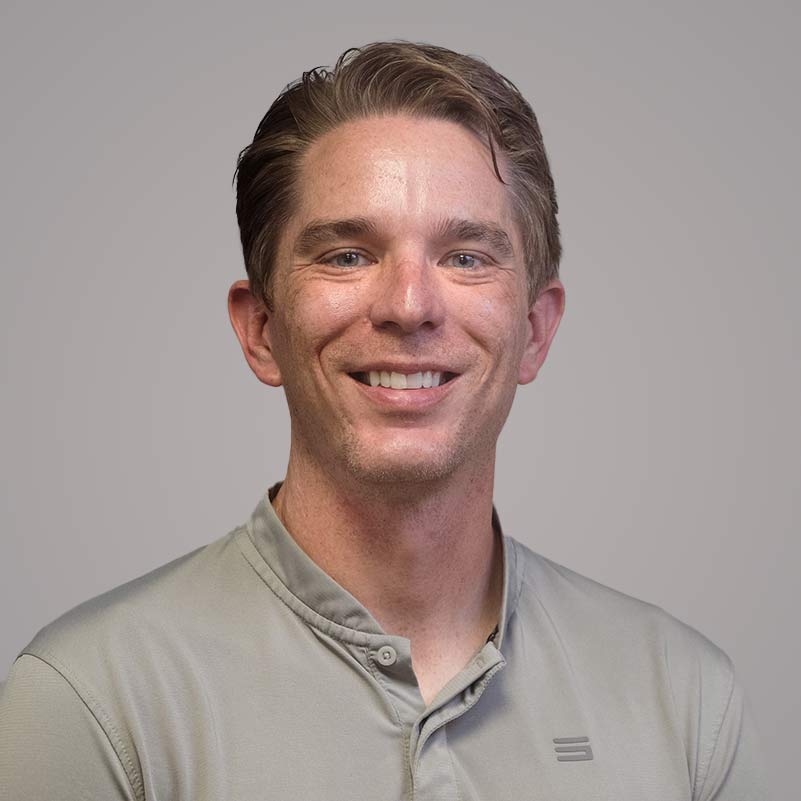
New Hire for Peabody Community Foundation

Paige Barnes
Associate Director, Peabody CF

Paige was born and raised in Peabody, Kansas. She graduated from Peabody High School and received a degree in Mass Communications from Butler Community College.

She most recently served as the Social Services Director of Peabody Health and Rehab where she had many responsibilities including admissions and discharges, behavior management, facilitating resident council meetings and care conferences, and more. Paige also serves as a member of USD #398 school board and a highlight of her week is delivering meals on wheels for the senior center.

She has an immense love for children and seniors and is excited to learn more about the housing initiatives in Peabody to improve the community.

Paige currently resides in Peabody and enjoys spending time with her nieces. In her spare time, you can find her participating in all things outdoors including fishing, hunting, camping, and hiking or sitting on the porch enjoying the company of good friends.

2024 Scholarship Season a Success!

What a successful scholarship season! CKCF and affiliates together granted $111,150 to 100 students from 58 competitive scholarship funds in the 2024 scholarship cycle. El Dorado Community Foundation had the largest amount of scholarships awarded at $28,200, and Halstead Community Foundation came in close behind, granting $21,900 and they also had the most open competitive scholarships this 2024 cycle and 16 scholarship recipients.

With the rising costs of education and other living expenses, scholarships are a vital component in educating the youth in our communities. It is not too late to speak with us about taking the first steps in establishing your own scholarship or adding your donation to an existing fund.

Did you know that scholarships & educational funds make up nearly 23% of funds held by CKCF? Your generosity makes a world of difference as you will see in the note below.

“My name is Quinn Houseman, I am a graduate of El Dorado High School, and I plan to major in Mechanical Engineering at Wichita State University in the fall. I am writing to express my heartfelt gratitude upon being selected as a recipient of the George Trimble Special Need Fund for the Fall 2024 semester. Your generous support is not only seen as a financial aid, but as inspiration and encouragement to further my studies. This scholarship has significantly eased my financial burden and has allowed me to explore the capabilities of my education. Thank you once again for your generosity and investment in my future. I am truly honored.”

Thank you!